Since modern culture now treats everything people say on TikTok, Reddit, YouTube, and social media as the unquestionable truth, season three of Euphoria has apparently spiraled into complete disaster, with people across the internet labeling the series “too different,” “hypersexual,” “exhausting,” and “completely detached from reality,” while every new scene involving Sydney Sweeney immediately transforms into another massive argument about whether the show has collapsed beneath its own ambition or evolved into something audiences honestly just feel uncomfortable confronting.
The backlash has literally become impossible to ignore. Critics have described the season as an “overstuffed mess,” “spiritually empty,” “boring,” “disturbing,” and “exploitative,” while others have attacked the western-inspired tonal shift, the slower pacing, and more adult themes involving addiction and social media obsession. Reviews surrounding Sam Levinson have accused the creator of leaning into the show’s “worst tendencies,” losing emotional grounding, and misunderstanding his own characters, while early aggregate scores landing around a 48% critical rating on Rotten Tomatoes only intensified the narrative that the series had somehow lost itself entirely. Much of this negativity was based on previews and the very first episode alone, before the season even took off. I bet there are a lot of people out there changing their tune on this absolutely wild, but smart television show, depicting real things that real humans experience. Maybe it’s not what you, or your best friend or moms sisters kids kid have went through, but it happens, a lot. Levinson does a wonderful job bringing these dark, but truthful lifestyles to life on screen.
Much of the outrage has specifically centered around Cassie Howard’s storyline, particularly scenes depicting humiliating and sexually performative OnlyFans content involving insane roleplay, submission, and degradation that critics and “fans” immediately dismissed as exploitative shock value designed purely to ruffle feathers. Social media erupted with calls for cancellation, accusations that the show had crossed into self-parody, and endless arguments claiming the writing had become cartoonishly detached from reality.
I honestly think that reaction says far more about modern audiences than it does about the quality of the show itself.
The uncomfortable truth many viewers seem resistant to admitting is that Euphoria is not inventing this behavior out of thin air nearly as much as it is exaggerating dynamics already dominating internet culture, influencer spaces, subscription-based adult platforms, and fame-driven industries where humiliation, emotional instability, and public performance increasingly function as currency for validation. Millions of people—women, men, influencers, aspiring celebrities, creators, athletes, and ordinary users alike—already participate in systems where visibility itself becomes monetized, personal boundaries become negotiable, and increasingly extreme behavior is rewarded algorithmically through clicks, engagement, outrage, and virality.
That reality is exactly what makes Cassie such an effective and disturbing character.
Five years after the original season exploded into pop culture, these characters were never going to remain trapped inside glitter-coated high school hallways, stylized house parties, and aesthetically romanticized self-destruction. Adulthood naturally reshapes insecurity into something darker, lonelier, and way more complicated once identity becomes intertwined with social media visibility.
Ironically, one of the loudest criticisms surrounding the season—that Cassie and Nate remain “too much the same” despite the time jump—may actually reveal the series’ sharpest observation about trauma and toxic identity patterns, because real people rarely evolve in neat, cinematic ways. Emotional instability frequently hardens with age rather than disappearing. The exhausting repetition critics complain about feels less like narrative failure and more like intentional commentary surrounding how cycles of narcissism and self-destruction often continue long after people believe they should have “grown out” of them.
What makes this evolution so fascinating to me is how brilliantly Sam Levinson tricks audiences into thinking they’re simply watching chaotic and outrageous behavior unfold, when in reality the show is actually making fun of and exposing the exact culture people participate in every single day online. While viewers repost clips, make memes, film reaction videos, argue in comment sections, and rage about the show nonstop across social media, they are unknowingly feeding into the same obsession with attention, validation, outrage, and performance that the series has been criticizing from the very beginning.
What many people call “bad writing” is often just the discomfort of seeing parts of themselves reflected back at them, which is exactly why Cassie’s pursuit of attention has caused such a strong reaction online, especially when her behavior feels a lot more realistic than viewers probably want to admit. Her constant need for validation and approval through social media reflects a culture where influencers turn their personal lives into content, athletes build identities around engagement, creators profit from trauma, and ordinary people increasingly measure their self-worth through followers, likes, views, and public attention.
I think what makes this season genuinely brilliant is that it refuses to soften any of those ideas for the comfort of the audience. Earlier seasons disguised the toxicity through glitter makeup, hypnotic Labrinth scores, neon cinematography, beautiful actors, and the seductive energy of teenage recklessness, whereas season three strips away much of that fantasy and forces viewers to sit inside something uglier, colder, lonelier, and significantly more recognizable. The dysfunction only feels more disturbing now because adulthood removed the aesthetic protection surrounding it.
That uncomfortable realism becomes even more effective because of how brilliantly Sydney Sweeney weaponizes the audience’s perception of her own celebrity, blurring the line between performer and persona so convincingly that viewers begin treating Cassie less like a fictional character and more like a direct extension of Sydney herself, which only deepens the show’s critique surrounding modern fame and society’s inability to separate public image from authentic identity. Meanwhile, Jacob Elordi continues operating as the series’ most dangerously magnetic force, embodying a style of toxic masculinity so cold, narcissistic, emotionally detached, and seductive that audiences cannot decide whether they are repulsed by him or completely fascinated, a contradiction the series understands with terrifying precision.
What I love most about Euphoria is that beneath all the chaos, sexuality, emotional destruction, controversy, and internet discourse exists a series completely aware of the culture staring back at it through a screen, which is exactly why the backlash surrounding this season feels so emotionally charged. Forgettable television does not fracture audiences, dominate timelines, inspire think pieces, trigger outrage, generate memes, and consume social media at this level. Weak art disappears quietly, whereas Euphoria continues forcing uncomfortable conversations surrounding vanity, loneliness, identity, validation, obsession, and performance culture in ways I honestly believe most television is far too afraid to attempt anymore.
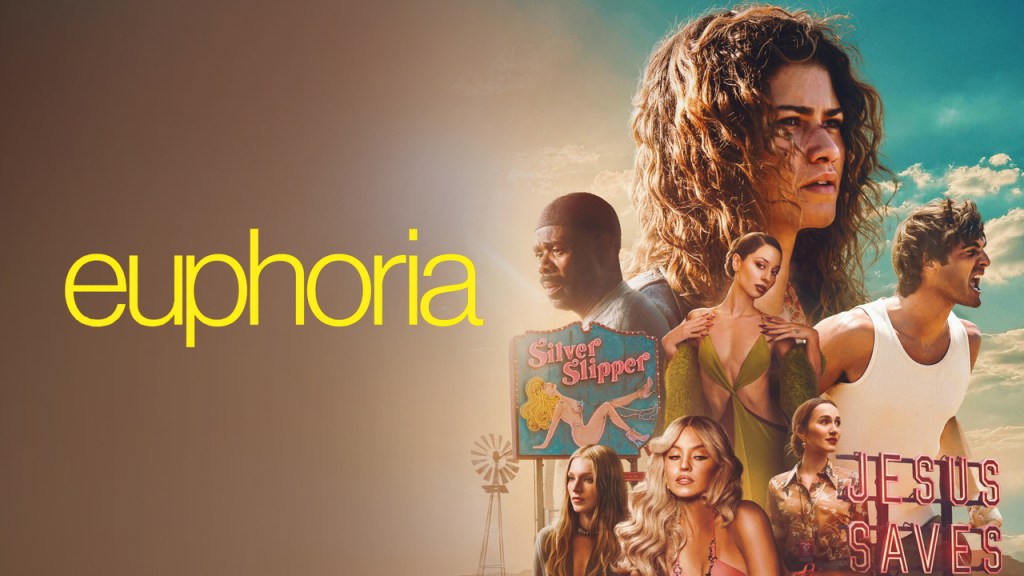
Euphoria: Season Three Poster | Photo by TV Insider


Leave a comment