There are certain artists you don’t just listen to—you live through them, and for me, Kesha has always been one of those artists, not just because of the music itself but because of the way her presence has threaded through different chapters of my life, showing up at the exact moments when I needed something—energy, escape, honesty—whether I realized it at the time or not.
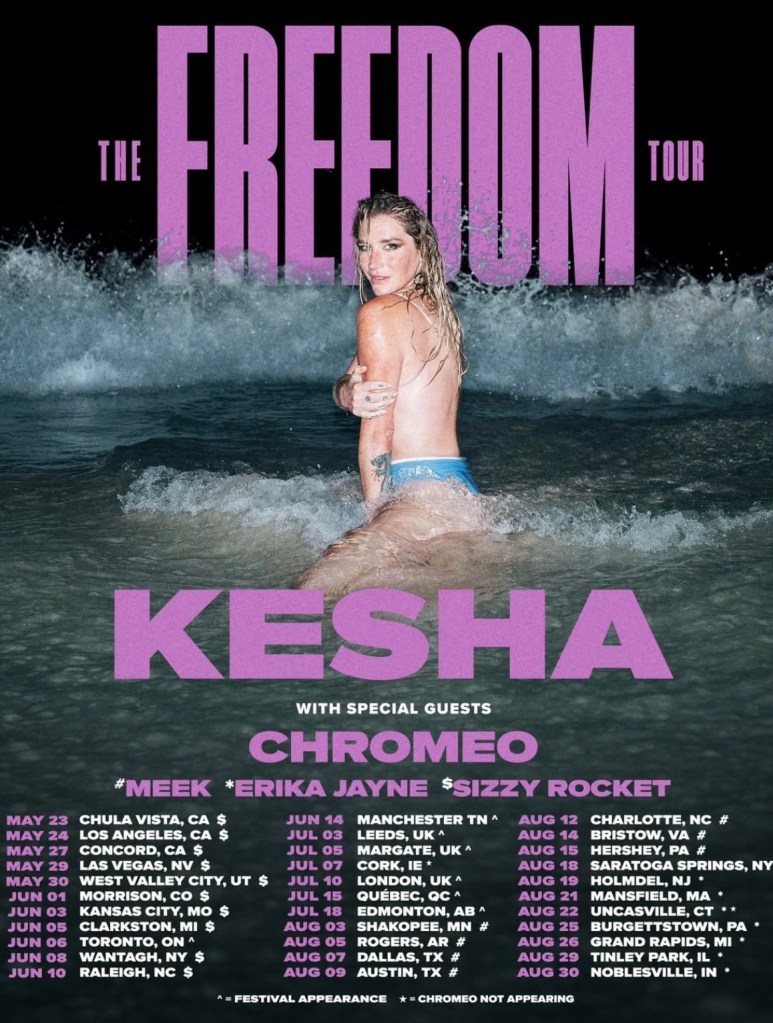
Kesha and I are both Pisces, both blonde, and wired with that same kind of chaos and emotional honesty that hits deeper than most people are willing to admit; whatever that mix is, it has always felt personal beyond fandom, which is why seeing her name at Red Rocks doesn’t read like just another announcement—it feels inevitable. And a huge congratulations to Kesha—Red Rocks is a moment.
Before Everything: Dallas, 2010
Before the transitions, the heavier moments, or any real sense of direction, there was Dallas, where I grew up—and there was movement.
Back in 2010, when I was still living there, Animal and the follow-up Cannibal were constantly on repeat as I trained for and ran my first half marathon, and that era of Kesha wasn’t about depth or introspection in the way her later work would become—it was about momentum, about pushing forward, about having something loud and unapologetic in your ears when your body is tired and your mind is trying to catch up.
There’s something underrated about that kind of music, because not every chapter of your life needs reflection—sometimes you just need energy, confidence, and something that keeps you moving, and at that point in my life, that was exactly what those albums gave me. I listened to those albums throughout the entire race.
When Warrior Hit at the Right Time
When her album Warrior came into my life, everything felt a little less clear, like one of those in-between phases where you’re trying to figure out who you are while also dealing with the fallout of a breakup that lingers longer than you expect, and what that album provided wasn’t just sound—it was attitude, it was edge, it was something that didn’t ask for permission to take up space.
It carried a kind of controlled chaos that felt both reckless and intentional, and that same energy extended beyond the music into how she presented herself during that era, including that bizarre, hilarious dinosaur interrogation promo with the overly serious, borderline sexy cop, where she leaned fully into the absurdity without ever losing control of the moment, showing a level of self-awareness and humor that most artists either can’t access or are too afraid to commit to.
That balance—being chaotic but intentional, weird but completely in control—is what separated her from everyone else trying to replicate that aesthetic without understanding what made it work in the first place.
From Chaos to Healing: Rainbow
Years later, when Rainbow arrived, the tone shifted in a way that felt undeniable, because if Warrior was about surviving chaos, Rainbow was about confronting it, unpacking it, and finding a way to move forward with something more grounded and honest.
Praying wasn’t just a single—it was a statement, the kind of song that cuts through whatever you’re holding onto and forces you to sit with it, and during darker moments when things weren’t as steady as they may have looked on the outside, that album became something more than music, something that offered a sense of stability when it was needed most.
The Fight Behind the Music
What a lot of people don’t fully grasp is how much Kesha has had to fight, not just within the music industry but within her own identity as an artist and as a person, and her legal battle with Dr. Luke, which began in October 2014 and stretched nearly a decade before reaching a settlement in June 2023, was rooted in serious allegations of abuse, sexual assault, and defamation, ultimately becoming one of the most complex and defining artist-rights battles in modern music.
But even before much of that played out publicly, there was already a shift happening, and one of the most symbolic moments of that change came when she dropped the dollar sign from her name in early 2014, moving away from the “Ke$ha” persona that had come to represent a version of herself built on being carefree, unbothered, and always strong, which she later recognized as more of a facade than reality.
After stepping away and going through treatment, she made the decision to let that version go, not because it wasn’t powerful in its own way, but because it no longer reflected who she actually was, and removing the “$” became a way of reclaiming control, stripping away the commercialization and expectation, and allowing her music moving forward to come from a place that was more honest, more vulnerable, and ultimately more real.
That kind of self-awareness, especially in an industry that often rewards consistency over authenticity, is rare, and it’s part of what makes her evolution not just noticeable, but meaningful.
More Than the Image
Kesha has always been easy to label from the outside, reduced to glitter, chaos, and a party-driven image that only tells part of the story, but underneath that surface is someone who is deeply intentional, highly intelligent, and fully aware of the character she’s playing at any given moment.
She’s a songwriter first, someone who understands how to build emotion, how to structure a moment, and how to create something that resonates beyond just the immediate listen, and when you look back at even the most absurd or chaotic elements of her career, like the Warrior era promotional content, there’s always a level of control and awareness underneath it that separates it from being random.
That’s the difference between chaos for attention and chaos with purpose, and she has always operated in the latter.
Red Rocks: Where It All Connects
So when I saw that Kesha is coming to Red Rocks Amphitheatre, it didn’t register as just another concert announcement, because for me, it represents something much bigger than that, something that ties together years of moments, memories, and versions of myself that all had her music playing in the background in different ways.
From running through Dallas with Animal and Cannibal, to navigating uncertainty with Warrior, to finding something more grounded in Rainbow, every phase connects, and standing in a place like Red Rocks, known for its history, its energy, and its ability to make moments feel larger than they are, feels like the exact setting where all of that comes together.
There’s something about timing that you can’t force, something about certain moments that feel aligned in a way you don’t question, and this is one of them, where the artist, the place, and the point in your life all meet at the same time.
Final Thought
Some artists soundtrack your life, while others help shape it in ways you don’t fully understand until you look back, and Kesha has managed to do both, which is why June 1 at Red Rocks doesn’t feel like just another night—it feels like something that was always meant to happen, something that carries weight, memory, and meaning in a way that goes beyond the music itself. June 1 can’t come soon enough.
 Michael's Jam
Leave a comment